– – – – – – – – – –
デザインチーム選考の発表
「リサーチ・デザイン・ビルド共同プログラム」の公募に応募頂きました皆様に心より感謝申し上げます。
今回の評価委員会を構成しました東京大学の今井公太郎(教授)、安原幹(准教授)、横張真(教授)、丹下健(教授)、齋藤暖生(講師)により、応募されたプロポーザルは慎重に評価され、2022年10月14日に最終候補者の面接を行いました。委員会は、プログラムのテーマが如何に分かりやすくコンセプト化しているか、また、次世代に向けた人と森の関係性の構築という観点の可能性を高く評価して、受賞案を選出しました。
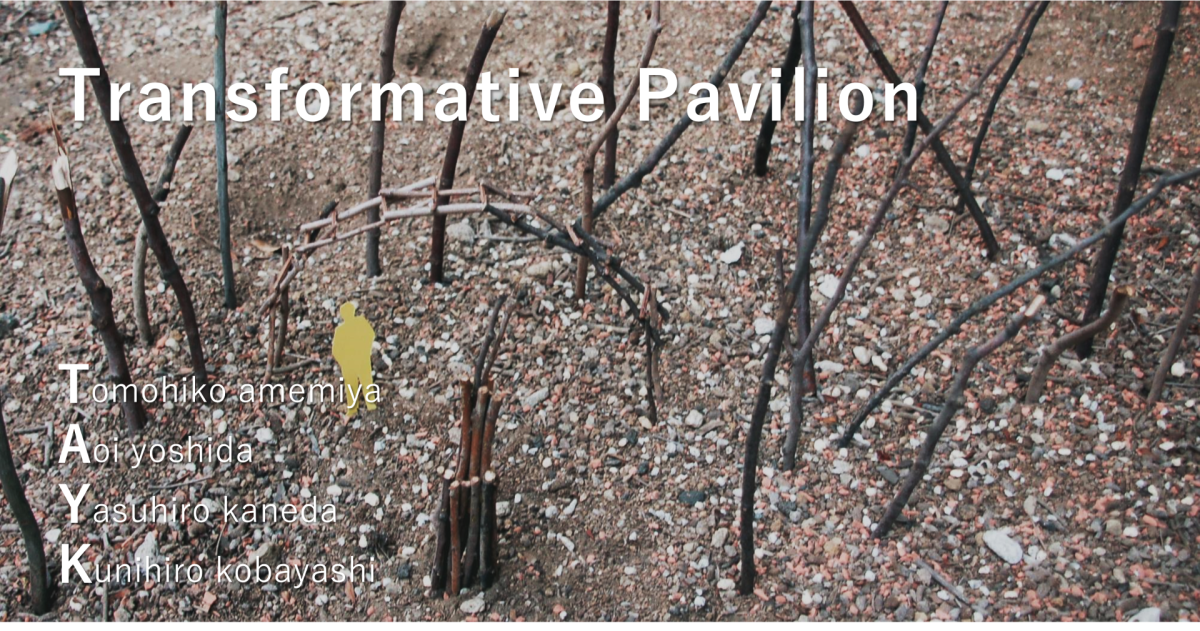
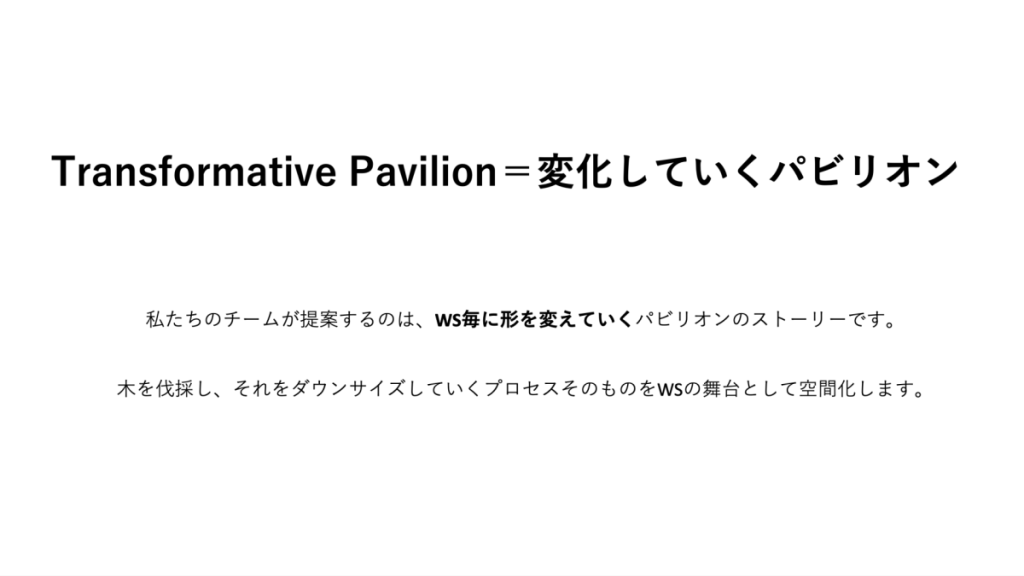
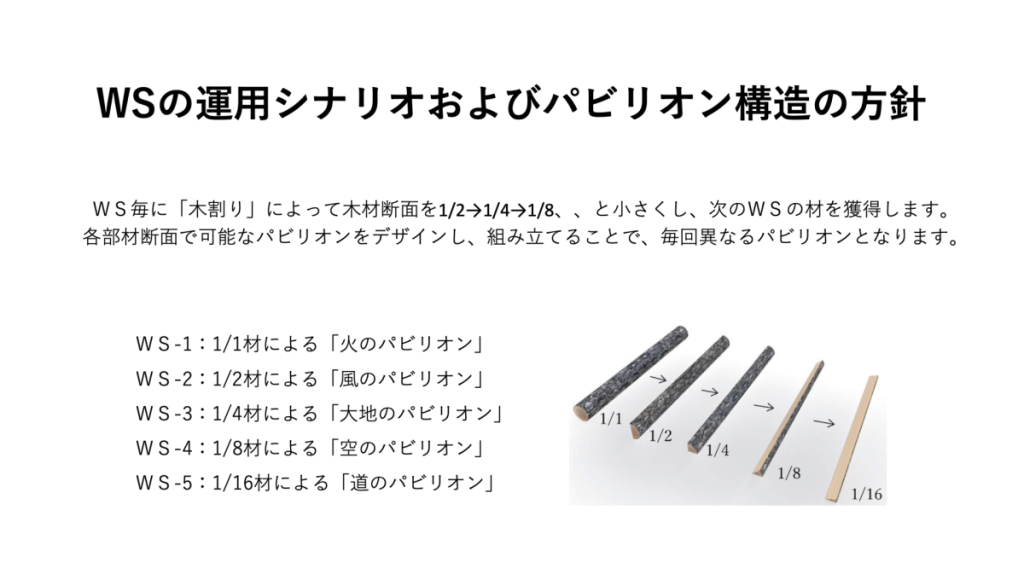
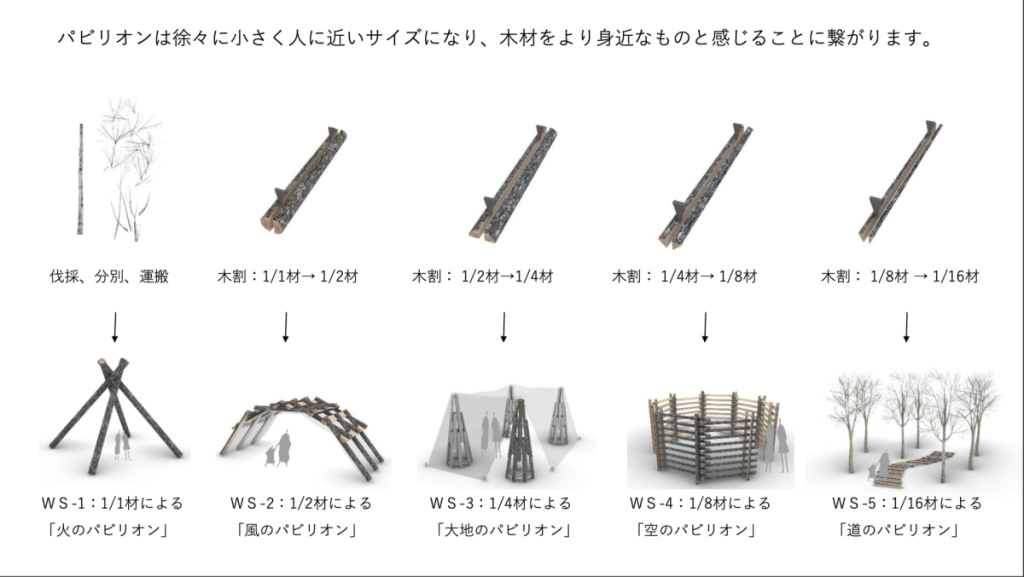
チームTAYKの雨宮知彦さん、小林国弘さん、吉田葵さん、金田泰裕さんが、この度のデザインチームに選出されました。これより1年間、memu earth labと共同で活動を展開していきます。
– – – – – – – – – –
the Design Team is selected
We would like to express our sincere thanks to everyone who submitted their proposals to the call for <<Collaborative Research + Design + Build Program>> and helped make it a success.
The esteemed evaluation committee of Prof. Kotaro Imai, Assoc. Prof. Motoki Yasuhara, Prof. Makoto Yokohari, Prof. Takeshi Tange, Lect. Haruo Saito of the University of Tokyo has carefully evaluated the submitted proposals and interviewed the finalists on the 14th of October 2022. The committee selected the winning entry based on how well it conceptualized the theme of the program, presenting the strong potential for the development of architectural interventions toward building people-forest relationships for the next generation.
Our special congratulations go to the team TAYK – comprised of Tomohiko Amemiya, Kunihiro Kobayashi, Aoi Yoshida, and Yasuhiro Kaneda. Using complementary skills, the members generated synergy to develop the most outstanding proposal and joined us as the “Design Team” of the Traveling Forest project.
– – – – – – – – – –
提案書_Team TAYK]]>
「リサーチ・デザイン・ビルド共同プログラム」参加者公募
プログラムテーマ
建築的施策の開発: 次世代に資する人と森林の関係性の構築にむけて
プロジェクト名
Traveling Forest / 可動式パビリオン
プロジェクト拠点
北海道大樹町芽武(及び周辺地域)
– – – – – – – – – –
– – – – – – – – – –
プログラム概要
日本の森林面積は国土の67%を占めています。しかし、この自然の豊かさと数百年にわたる造林の歴史にもかかわらず、今日、日本の林業は社会経済面での停滞に直面しています。人と森林の関係性の希薄化によって多くの山村集落、あるいは森林を利活用する経済圏を形成する地域が過疎化や経済不況に陥る中、今回の「リサーチ・デザイン・ビルド共同プログラム」は、次世代に向けた人と森の関係づくりのヒントを模索します。
本プログラムは、UTokyo Ushioda Memu Earth Lab(略称:memu earth lab)が主催するものです。建築的施策の開発を通じてこれまでの人と森の関係を再読することを通し、地域の人々が様々な新しい機会を享受し、森との生産的な接点を育むこと、さらに地域コミュニティ内での新たなつながりが生まれることを目指します。
この建築的施策は、将来的により広範囲の、より多くの地域コミュニティに拡がることを念頭に、様々な森林環境や環境条件への適応性が一つの重要な機能的要件になります。今回は、この要件を試すための可動式パビリオン(名称は「Traveling Forest」)を開発する「デザインチーム」を募集します。
– – – – – – – – – –
「デザインチーム」の役割
十勝地方における人と森との関係の深い理解を得るため、本プログラムは大樹町及びその周辺地域のコミュニティとの協働を主眼に置いています。このため、当該地域で複数回のフィールドワークを行い、「Traveling Forest」のアイデアをチームとして発展させる機会を準備しています。フィールドワークは、6ヶ月にわたる「リサーチ・デザイン開発」の期間内(主な日程を参照)に実施されます。研究開発期間後、プロジェクトチームメンバーとの共同作業を通して具現化されたアイデアを実装(建築)します(図1参照)。
memu earth lab チームとの協働
図1の組織体制に示す通り、「Traveling Forest」プロジェクトでは、「デザインチーム」と「memu earth labチーム」が協働して「リサーチ・デザイン・ビルド」活動を行います。プログラム期間中は、「デザインチーム」と「memu earth lab チーム」の間で定期的にミーティングを行い、技術的な議論や進捗状況の確認をしながら、提案を具現化していきます。
プロジェクトチーム内での協働
「デザインチーム」は、現地の課題に関する見識や知識を得るため、現地でのフィールドワークの中で現地パートナーとの関係性を構築し、意見交換を行っていきます。またこれと並行して、東京大学のアドバイザーから、研究やデザインに関する学術的・技術的な観点からのアドバイスも得ることもできます。「デザインチーム」、現地のパートナーや専門家、そして東京大学のアドバイザーの間のコミュニケーション全般は、「memu earth labチーム」によって進行・コーディネートされる予定です。
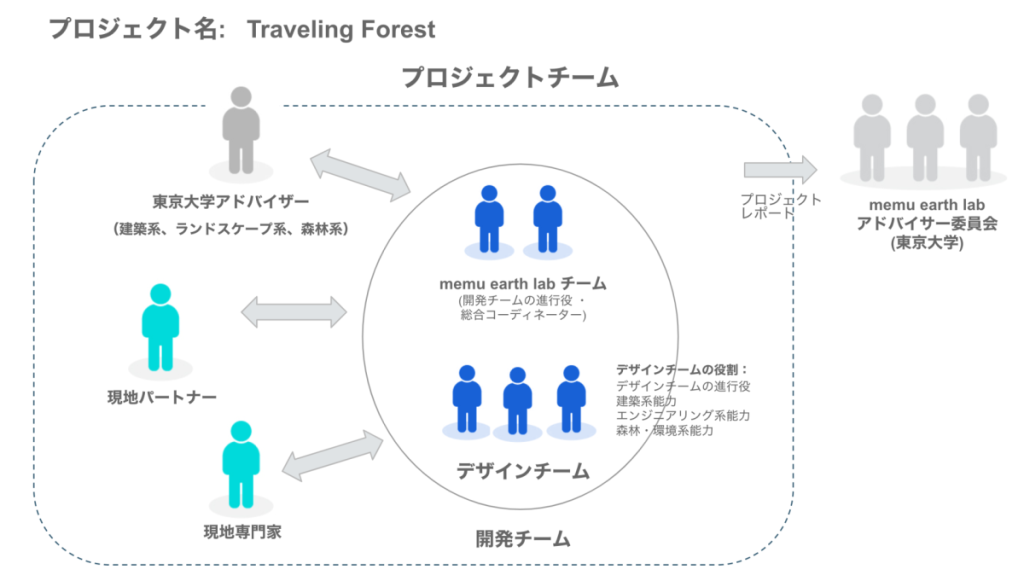
図1: プロジェクトの組織体制
インタラクティブ・リサーチを通じての協働
人と森の関係についての研究は、図2に示すように、「レイヤー1:再読」、「レイヤー2:インタラクティブ・リサーチ」、「レイヤー3:建築的施策」の3つのレイヤーから成るプロセスで構成されます。
レイヤー1で行われた作業をまとめた「再読レポート」は、人と森の関係を検討する上で考慮すべき観点をまとめたものであり、応募者はこれを事前に読み、現地の実情を理解しておく必要があります(提供資料参照)。
レイヤー2:インタラクティブ・リサーチでは、memu earth labが専門家や現地のパートナーと協力して行う研究活動が計画されています。「デザインチーム」は、デザイン開発プロセスの一環として、フィールドワークの際にこれらの活動に参加することが求められます。これらのイベントを通じて、現地の人々と交流し、建築的施策の提案を発展させるのに役立つ社会的フィードバックを得ることができます。
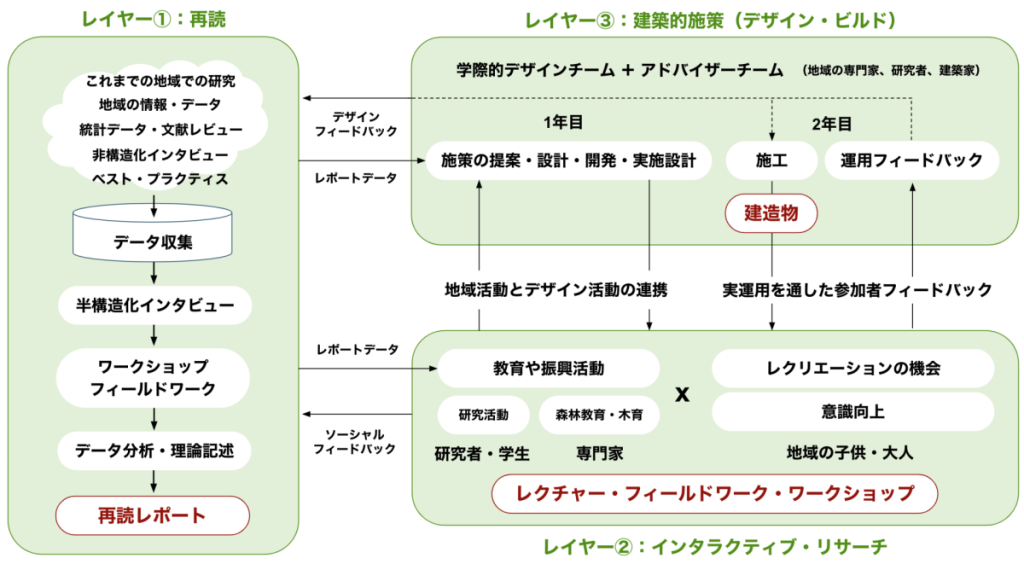
図2: memu earth lab による人と森の関係性の研究における3つのレイヤーのロードマップ
昨年2月に実施されたインタラクティブ・リサーチの事例:「木割り」
https://vimeo.com/719330730
建設前および建設中の協働
「リサーチ・デザイン開発期間」の終了までに、大樹町とその近隣の森林地域において、建築的施策の提案書を一般公開します(主な日程参照)。公開期間中に一般の方から集まった意見・感想に基づいて、「デザインチーム」は提案の修正を行います。
提案の修正が完了した後、東京大学のアドバイザーによる評価を経て、建設が開始されます。
「デザインチーム」は、建設作業を監督し、請負業社やサプライヤーからの設計内容に関する問い合わせへの対応も担います。また建設作業中の十勝地方の建設現場や製造プロセス等の管理・監督も「デザインチーム」が行うことを想定しています。
– – – – – – – – – –
デザインパラメターと運用シナリオ
以下に、「Traveling Forest」の今後の主な使用目的について簡単に説明します。参加者は、自身の提案が使用目的に対してどのように役立つのかという運用シナリオとともに、アイデアを提案してください。必要条件を満たすことだけにとらわれず、自由な発想で提案してください。。また、提案の内容に完成度は求めず、ラフなもので構いません。採用されたアイデアは、リサーチ・デザイン開発の段階で、「プロジェクトチーム」(図1参照)と共同で発展させていきます。
使用目的
- 「Traveling Forest」のコンセプトは、自然の中の様々な場所で教育イベントやレクリエーションを行える可動式パビリオンです。このパビリオンが、人々が安全かつ楽しく森と触れ合うための効果的なインターフェイスとして機能することが期待されます。
- イベントの参加対象者は主に地元の方々で、あらゆる世代にわたります。そのため、環境条件の変化や厳しい地形に対応できる基礎構造が必要とされます。一方で、「Traveling Forest」を構成する基礎構造による人間と自然の間への人為的介入の度合いについては、慎重に判断する必要があります(提供資料の「再読レポート」第3章参照)。
- パビリオンの可動性は、様々な自然環境下での運搬、組み立て、分解、運用を可能にする最も重要な設計パラメータの一つです。したがって、この可動性を構造的・機械的・経済的に実現する各種パラメータを、提案の段階から考慮することが不可欠です。
– – – – – – – – – –
スケジュール
プログラムの主な日程 は下記の通りです。「デザインチーム」のメンバーのプログラム参加期間は、2022年10月~2023年10月の予定です。また、「リサーチ・デザイン開発期間」の中で、大樹町芽武(及びその周辺地域)でフィールドワークを行います。フィールドワークの日程は、memu earth labのメンバーと協議し、参加可能人数が最も多い日程に調整する予定です。
なお、本プログラムの参加期間中も、「デザインチーム」は他の職務(学業、オフィスワーク等)を自由に行うことができます。

*応募状況、また、やむを得ない事情により、日程が変更になる場合があります。
*登録締め切り:2022年8月20日→9月15日の提出締め切りまで延期しました。
– – – – – – – – – –
プログラムでの使用言語
日本語・英語
- 応募者は、いずれの言語でも提案書の提出が可能です。本プログラムは日英二ヶ国語で実施されますので、日本語を話す方、英語を話す方のいずれも歓迎します。
- ただし、プロジェクト期間中、現地のパートナーやアドバイザーとの円滑なコミュニケーションや、一般の方々への日本語でのプレゼンテーションができるよう、少なくとも1名のネイティブレベルまたは十分なレベルで日本語を話せる人材を確保する必要があります。
– – – – – – – – – –
応募対象者
- 日本国内在住の方を対象に公募します。学生、社会人ともに歓迎します。
- 複数の専門分野にわたるメンバーで構成されるチームでの応募を推奨します。
- 応募はチームでも個人(一緒に応募するメンバーがいない場合)でも可能です。
チームとして応募する場合
- 1チームの人数は最大6名までとします。
- チーム内の役割と責任の分担を記載した「デザインチームの役割シート」を記入し、提出してください。
- チーム内で補えないスキルや知識がある場合、将来的な能力の補完を保証する「コンセンサスシート」への署名をお願いします。これは、プログラムスケジュールに遅延を生じさせないよう、チームに必要な能力や知識を適切な時期に外部委託(例:コンサルタントを雇う、指導教員に相談するなど)により補完することに同意するものです。
個人で応募する場合
- 一緒に応募するメンバーがいない場合は、応募者個人で応募することも可能です。
- 応募者個人として果たせる役割・能力を「デザインチームの役割シート」に記入し、提出してください。
- 「コンセンサスシート」にサインし、選考の最終段階で主催者から指定されるチームに参加することを承諾してください。
– – – – – – – – – –
チーム選考の流れ
- 応募を受け付けたのち、評価委員会が書類選考を行います。
- 書類選考を通過したファイナリストには、主催者から面接の詳細をメールにてご連絡いたします。 評価委員会による面接は、10月14日(金)午後、東京大学生産技術研究所のキャンパス@駒場II(もしくは都合のつかない方が多ければオンライン)で行います。遠方からの参加の場合の交通費は主催者が負担します。
- 面接終了後、選考を通過したチームをプログラムホームページで発表するとともに、主催者から直接メールでもご連絡します。
– – – – – – – – – –
研究費
- 研究費:本研究のためにチームに300万円の研究費が配分されます。
- 次年度に実際に施工される費用は上記に含みません。
- 日本国内から北海道芽武への交通費:往復50,000円を上限とし、支給します。
- 芽武内での交通費:レンタカー代を負担します。芽武内および周辺地域への短距離移動ができるよう、少なくとも1名は運転免許を保持していることが推奨されます。
- 宿泊費:芽武内での滞在費用はプログラム主催者が負担します。
- 食費などの個人的な出費は参加者の負担となります。
– – – – – – – – – –
東京大学アドバイザー(デザインチームの選定およびプログラム進行中のアドバイス)
デザインチームの選定、およびプロジェクト進行中のアドバイスを実施するチームは、東京大学の以下の研究者により構成されています
建築系 :今井 公太郎(教授)、安原 幹(准教授)
ランドスケープ系:横張 真(教授)
森林系:丹下 健(教授)、齋藤 暖生(講師)
– – – – – – – – – –
提供資料
応募者は、以下の資料をもとに、当該地域を理解した上で、提案の形成を行ってください。
再読レポート:memu earth labが現在行っている、森と人との関係や、その関係性を定義する各種パラメータに関する研究の概要です。日本語版・英語版 PDFをダウンロードしてください。
大樹地区とその周辺の森林:PDF
動画
–Rereading Forest Winter
-Rereading Forest Spring(製作中)
– – – – – – – – – –
登録方法
締め切り:2022年8月20日→9月15日の提出締め切りまで延期しました
登録対象者:すべての応募者が、以下の「登録リンク」から登録フォームを入力する必要があります。
登録リンク: 登録フォーム
– – – – – – – – – –
提出方法
締め切り:2022年9月15日
提出者:チーム毎に、登録済みのチームメンバーが提出します。1チームにつき1回、以下の「提出リンク」から提出してください。
提出が必要な資料
1- コンセプトアイデア:A4-1枚の提案概要書とA4-2枚までの提案スケッチ
上記のデザインパラメータに対応するコンセプトの提案である必要があります。また、その提案がいかに地域コミュニティを惹きつけ、どのように地域コミュニティに活用されうるかを説明するユーザーストーリーを織り込んでください。各チームは、提案するアイデアの概要を記したA4サイズ1枚を提出する必要があり、さらにそれに付随するスケッチや画像などをA4サイズで最大2枚まで提出できます。これらは、1つのPDFファイルとして提出し、ファイル名は「チーム名_Proposal.pdf」としてください(例: Xxxxx_Proposal.pdf)。
2- デザインチーム役割シート:ダウンロードした様式に記入
各チームで1枚提出する、チーム内の役割分担とチーム内でまかなえる能力を説明するためのものです。こちらからダウンロードして記入してください。
3- 履歴書:PDFを提出
各チームメンバーが、履歴書を提出する必要があります。ファイル名は「氏名_履歴書.pdf」としてください(例: 里太郎_履歴書.pdf)。
– – – – – – – – – –
プログラム主催者
memu earth lab
〒089-2113 北海道大樹町芽武158-1
お問い合わせ先
詳細などの各種お問い合わせは、下記メールアドレス宛にご連絡ください。
handeu@iis.u-tokyo.ac.jp(memu earth lab)
Call for participation in a << Collaborative Research + Design + Build Program>>
Theme of the Program
Development of architectural interventions: towards building people-forest relationships for the next generation
Project Name
Traveling Forest / a movable pavilion
Project Location
Memu, Town of Taiki (and its neighboring area), Hokkaido
– – – – – – – – – –
– – – – – – – – – –
Brief of the Program
The total area of forest land in Japan accounts for 67% of the national land. However, despite this wealth and hundreds of years of silviculture history, Japanese forestry faces socio-economic stagnation today. While the growing gap in the people-forest relationship causes the depopulation and economic recession of forest communities, our program aims to reduce this gap by working toward building people-forest relationships for the next generation.
The [Collaborative Research + Design + Build Program] is established and hosted by UTokyo Ushioda Memu Earth Lab (shortly, memu earth lab). The program will reread the relationship between people and forests through the development of architectural interventions. As a result of the architectural interventions, we expect that the locals will be able to enjoy a number of different opportunities, fostering a productive interface with the forests and forming new connections within their communities.
Adaptability to different forest environments and environmental conditions is one of the key elements of this intervention so that it can reach more local communities across a broader geographical area. To meet this functional requirement, our program calls for a [Design Team] to develop ideas for a mobile pavilion as we call a “Traveling Forest”.
– – – – – – – – – –
The Role of the [Design Team]
To gain a deeper perspective of the people-forest relationship in the Tokachi region, our primary focus is to work with local communities in the town of Taiki and its neighboring area. Therefore, our program offers participants to develop their ideas for “Travelling Forest” as a team by making multiple fieldwork in the region. The fieldwork will be conducted during the six months period of [Research & Design Development] (see the Key Dates). The developed idea is going to be shaped and will actually be built through collaborative work with the Project Team members (see Fig. 1) as explained below.
Collaboration with the memu earth lab’s team
The organizational structure of the program in Fig.1, illustrates that the selected [Design Team] will perform the program’s “Research + Design + Build” activities in collaboration with [memu earth lab Team]. During the entire program time, proposals will be given shape by the [Design Team] together with [memu earth lab Team], holding regular meetings for technical discussions and progress updates.
Collaboration within the Project Team
To gain insight and knowledge about local issues, the Design Team will establish communication and exchange opinions with local partners during the fieldwork in the region. In parallel, the team is also expected to receive academic advice from the University of Tokyo advisors about research and design-related subjects from academic and technical perspectives. The general communication between the Design Team, local partners, and the University of Tokyo academic advisors will be facilitated and coordinated by [memu earth lab Team]
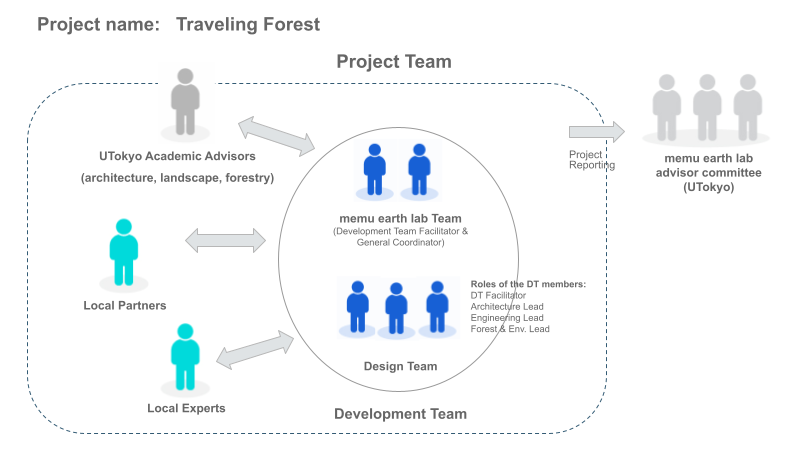
Fig. 1 The program’s organizational structure
Collaboration through Interactive Research
As introduced in Fig. 2. the research on the people-forest relationship is formed upon a three-layered process: “Layer 1: Rereading”, “Layer 2: Interactive Research”, and “Layer 3: Architectural Interventions”.
The Rereading Report, a summary of work conducted at “Layer 1”, discusses critical aspects surrounding the relationship between people and forests and must be read by applicants to be familiar with local facts (found under provided resources).
At “Layer 2: Interactive Research” research activities are planned by memu earth lab to be performed in collaboration with experts and local partners. The Design Team is required to participate in these activities during the fieldwork as part of their design development process. During these events, the Design Team will have a chance to interact with local peoplethat provides social feedback to the team to advance their proposal of the architectural intervention.
As illustrated in Fig. 2, the feedback generated through the activities as part of “Layer 2: Interactive Research”, is going to support the design work at this [Collaborative Research + Design + Build Program] which forms the “Layer 3: Architectural Interventions”.
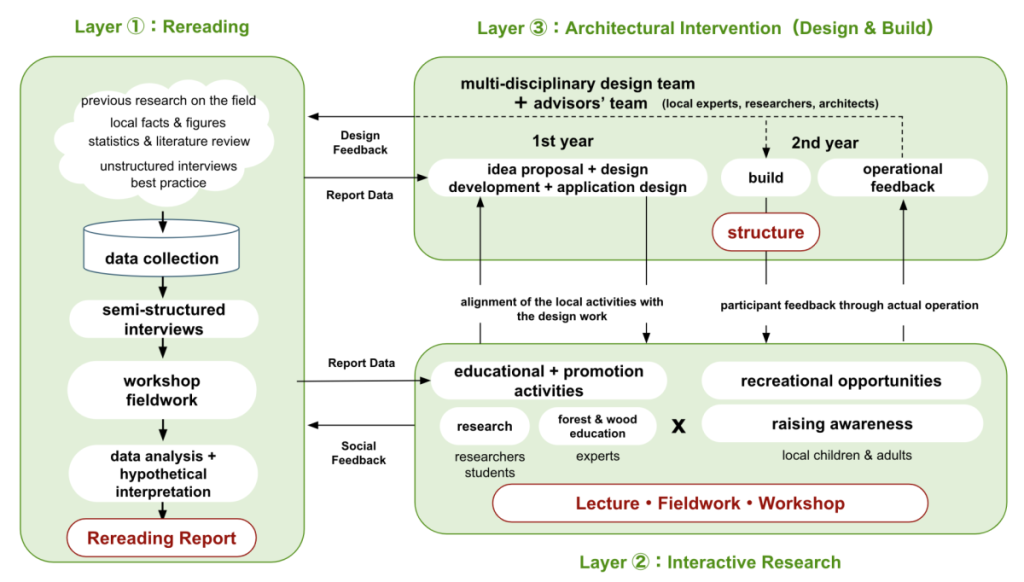
Fig. 2 The three-layered roadmap of people-forest relationship research by memu earth lab
Example of Interactive Research Program held on February 2022 on splitting the wood.
https://vimeo.com/719330730
Collaborations toward and during the Commissioning
By the end of the Research & Design Development period, the proposal is going to be exhibited to the public in Taiki and its neighboring forest communities (see the Key Dates). During the exhibition period, the public’s opinion and feedback will be collected, and the [Design Team] will respond with adjustments to the proposal.
After the proposal of the architectural intervention is complete the application design will be evaluated by the University of Tokyo academic advisors before its built.
It will be the [Design Team] that oversees the commissioning period, and it will also be responsible for responding to questions about the design details from the contractor and suppliers. During the commissioning period, the team is also expected to supervise the building site and/or the manufacturing facility, etc. in the Tokachi region.
– – – – – – – – – –
Design Parameters x Use Scenarios
Below is a brief explanation of the basic intended use of the “Traveling Forest” in the future. Participants shall propose their idea with a user scenario explaining how it can serve and contribute to the below explained purpose of the pavilion. The ideas shouldn’t be limited to the given essentials but express free creativity at the same time. The proposal could be in rough shape rather than a fully developed idea. Development of the selected idea will be performed collaboratively with the Project Team (see Fig.1) during the Research & Design Development phase of the program.
Purpose of Use
- “Travelling Forest” is a concept of a moving pavilion that has aim to house educational events and recreational opportunities at different locations in nature. We expect the pavilion to offer an effective interface that may allow people to interact with the forest in safe and joyful ways.
- Prospective visitors of aimed events will be mostly local people of all ages. They are going to have basic needs which require an infrastructure that can adapt to changing environmental conditions or tough terrain. In addition, any infrastructure that forms part of the “Travelling Forest” must be sensitive to the level of manmade intervention between humans and nature (see Provided Resources: the Rereading report, Chapter 3).
- Mobility is one of the most important design parameters that will provide the pavilion to be transported, assembled, and operated in different natural landscapes. Therefore, other parameters that allow such mobility from structural, mechanical, and economical perspectives, are essential to be considered while proposing your ideas.
– – – – – – – – – –
Key Dates
Below are the key dates of the program. The design team members are expected to be enrolled in the program between Oct. 2022 – Oct. 2023. During the [Research and Development of the proposal] the team is expected to perform fieldwork at Memu. The fieldwork dates will be decided together with the team and the memu earth lab members and adjusted to the majority’s convenience.
During the enrollment in the program, the selected [Design Team] will be free to perform their other responsibilities (academic work, office work, etc.).

*The dates of the program are subject to changes depending on the amount of submissions and in case of unavoidable events caused on the accounted and/or responsible project team members.
*Registration deadline has been extended till the Submission deadline date, September 15th.
– – – – – – – – – –
The Program Language
Japanese and English
- Applicants can submit their proposals in either one of the languages. The program will be conducted bilingual and it welcomes both Japanese and English speakers.
- However, the team must have at least one native or sufficient level Japanese speaker to assure smooth communication with local partners, advisors, and presentations to the public in Japanese throughout the project.
– – – – – – – – – –
Who Can Submit
- The call is open to the public, located in Japan. Students and professionals are both welcome to submit their ideas.
- Proposal submission as a team with multi-disciplinary members is encouraged.
- The submissions could be made as a team or as an individual (in case the applicant has no other member to submit with).
Submitting as a team:
- The number of members in a team is limited to 6 people.
- Please fill and submit the “Design Team Roles” sheet, which states the role and responsibility distribution within your team.
- In case of missing skills or knowledge in your team, please sign the Consensus sheet for future skill assurance. The skill assurance item states that your team agrees to provide the required skill or knowledge by outsourcing it (ex: hiring a consultant, consulting with an academic adviser, etc.) at an appropriate time that will not cause a delay in the program schedule.
Submitting as an individual:
- The applicant can submit the proposal as an individual if there is no other member to apply with.
- Please fill and submit the “Design Team Roles” sheet, which shows the role and responsibility you can fulfill as an individual applicant.
- Please sign the Consensus sheet for accepting to join a team that will be suggested at the end of the selection process by the host.
– – – – – – – – – –
Team Selection Process
- After the submission of the ideas, the evaluators will make a pre-selection of candidates to be interviewed. The pre-selected finalists will be contacted by email and informed about the interview details by the hosts.
- Interviews by the evaluators will take place on the 14th of October, 2022 afternoon at the University of Tokyo, Institute of Industrial Science campus (or online, depending on the majority’s schedule). The hosts will bear commuting fees. After the interviews, the selected team will be announced on the program Homepage and contacted directly by the hosts via email.
– – – – – – – – – –
Research Budget
- A research budget of 3,000,000 JPY is secured for the team
- A separate construction fee for the next year will be provided by the hosting organization.
- Travel expenses within Japan to/from Memu, Hokkaido: limited to 50,000JPY/round trip are provided.
- Commuting at Memu: The program host will bear commuting expenses (rental car). It is recommended that at least one team member have a driver’s license for short-distance commuting in/around Memu.
- Accommodation: The program host will bear the expenses of staying at Memu.
- Food and other personal spending are borne by the participant.
– – – – – – – – – –
UTokyo Academic Advisors (Design Team Selection Evaluators and Advisory)
The evaluation board will include leading academics from the University of Tokyo.
Architecture: Prof. Kotaro Imai, Assoc. Prof. Motoki Yasuhara
Landscape Architecture: Prof. Makoto Yokohari
Forest Studies: Prof. Takeshi Tange, Lect. Haruo Saito
– – – – – – – – – –
Provided Resources
Applications are required to read the content of the provided sources to gain an understanding of the place and the parameters that help shape the proposals.
- the Rereading Report: is a summary of the memu earth lab’s ongoing previous research on forest-people relationships and various parameters that define the relationship in the area. Please download the English edition / Japanese edition
- Map of Taiki area and its neighboring forests: PDF
- Rereading Forest Winter
- Rereading Forest Spring(製作中)Movies from the area
– – – – – – – – – –
Registrations
Deadline: 20 August 2022 – The registration deadline has been extended till the submission deadline date, September 15th.
who must register: every applicant must fill an individual registration form from the provided link.
the registration link: the Registration Form
– – – – – – – – – –
Submissions
Submission Deadline: 15 September 2022
who must submit: Registered team members submit as a team. One team must make one submission from the provided link.
Required materials to be submitted:
1- Concept idea: The proposal shall present a concept that responds to the above-given design parameters. The idea shall include a user story explaining how the proposal would attract and be used by the communities.
Each team must submit one A4 outlining the proposed idea and up to two A4 with supporting sketches or images. It must be submitted as 1 pdf file. Please name your file as: Team name_Proposal.pdf ex: Xxxxx_Proposal.pdf
2- Design Team Roles sheet: Each team must submit one filled sheet. This sheet explains the role distribution in the team and obtained skills. Please download the sheet here.
3- Resume: Each team member must submit a resume. Please name each resume as: Your name_Resume.pdf ex: TarohSato_Resume.pdf
– – – – – – – – – –
The Program Host
memu earth lab
address: 158-1, Memu, Taiki town, Hokkaido, Japan, 089-2113
Contact
Please contact the program host at the below email for more information and inquiries.
handeu@iis.u-tokyo.ac.jp (memu earth lab)
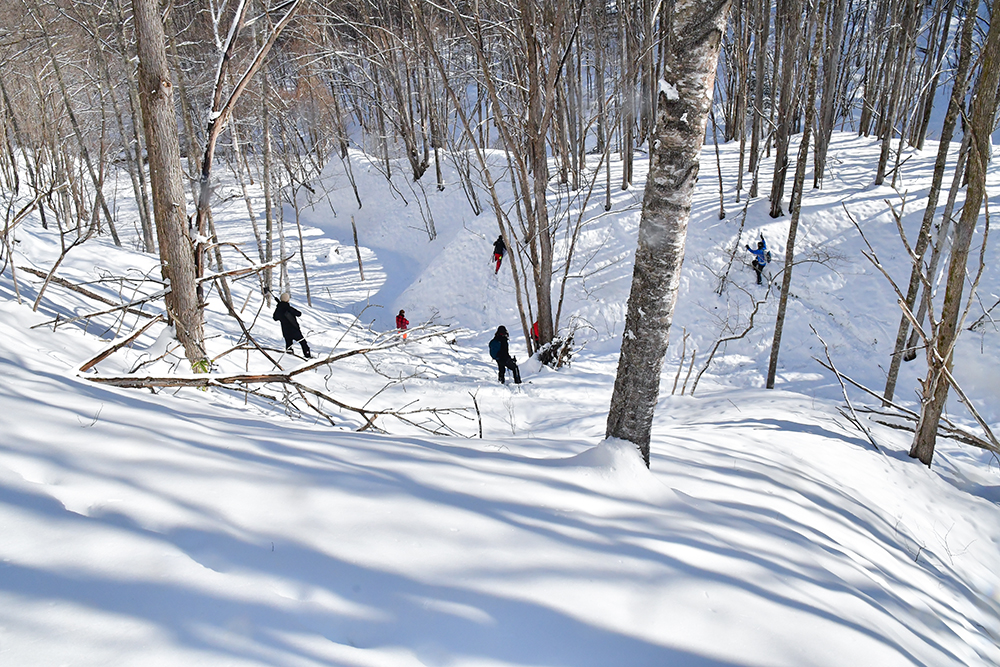
rereading report on the forest
describes ongoing rereading fieldwork toward building people-forest relationships for the next generation locals.
–
download pdf
–
text: Yu Morishita, Hande Ünlü
images: by the fieldwork participants
publication date: June, 2022
–
thank you, in order of appearance
Mikinori Matsumura, Shohei Kiyose (Osaka Nursry)
Masashige Sugawara (Okagesama)
Chihiro Kawase, Mikinari Tondokoro, Nao Fuke (minotake forest works)
Masahiko Nagase (Nagase Doken)
Haruo & Junko Saito (Fuji Iyashinomori Woodland Study Center, the University of Tokyo)
Akio Fujiwara (Field Data Research Center, the University of Tokyo)
Satoshi Suzuki (The University of Tokyo Hokkaido Forest)
Town Office of Taiki
有限会社大坂林業 松村幹了、清瀬昌平
社寺設計建築 株式会社おかげさま 菅原雅重
minotake forest works(池田町地域おこし協力隊)川瀬千尋、頓所幹成、福家菜緒
長瀬土建 長瀬雅彦
東京大学演習林富士癒しの森研究所長・森林圏生態社会学研究室 齋藤暖生
東京大学演習林富士癒しの森研究所・非常勤職員 齋藤純子
東京大学演習林フィールドデータ研究センター・森林圏生態社会学研究室 藤原章雄
東京大学北海道演習林 鈴木智之
大樹町役場(副町長・企画商工課、農林水産課)